
Authentic Surahs and Du’as to Recite During Pregnancy + Free Printable
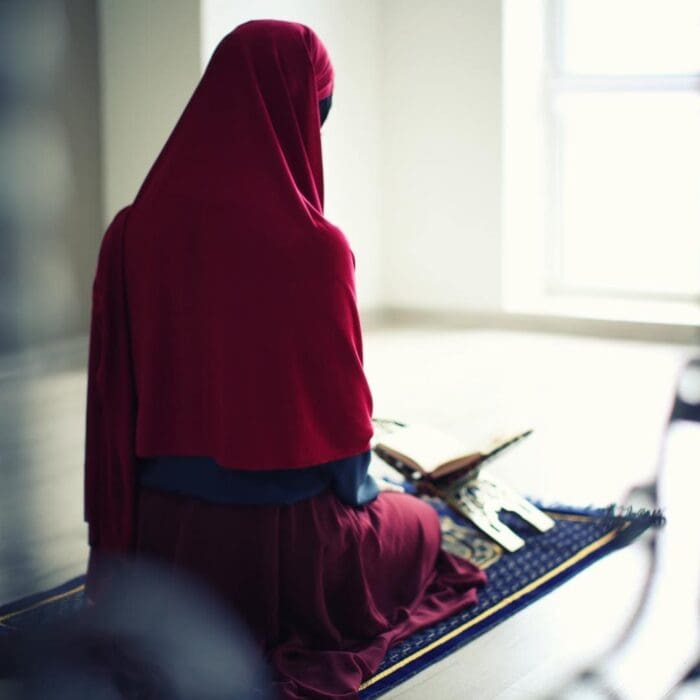
Surahs and Du’as to Recite During Pregnancy
Congratulations. Whether you found out this morning or you’re counting down the last few weeks, you already know the feeling: you want to do everything right for this baby. For a Muslim mother, that feeling turns straight into du’a.
So you search for surahs and du’as to read during pregnancy, and you find long lists. Read this surah for a beautiful baby, that one for an easy labor, another one for protection. Most of them never tell you where those promises come from.
I’m a mother of four, and I’ve spent more than twenty years practicing Positive Discipline and helping Muslim parents find a better way. What I’ve learned is that the things we do for our children hold up best when they’re rooted in what the Prophet, peace be upon him, taught us. Du’a is no different. Every du’a on this page comes from the Quran or an authenticated hadith, with its reference so you can check it yourself on quran.com and sunnah.com. Where a popular practice has a weak or unknown source, I’ll tell you that too, gently and honestly.
Please don’t feel you have to recite all of this every day. Pick the one or two that speak to you and make them yours. And remember that these du’as go alongside the care of your doctor or midwife, never in place of it.
When you first find out
When something pleasing or good news came to the Prophet, peace be upon him, he would fall into prostration in gratitude to Allah (Sunan Abi Dawud 2774, graded sahih by Al-Albani). A sajdah of thanks is a beautiful way to receive the news that you’re expecting.
Then pair that gratitude with this du’a. It comes from a verse that describes a mother carrying her child with hardship and delivering with hardship, and it ends with a prayer for your children.
رَبِّ أَوْزِعْنِي أَنْ أَشْكُرَ نِعْمَتَكَ الَّتِي أَنْعَمْتَ عَلَيَّ وَعَلَىٰ وَالِدَيَّ وَأَنْ أَعْمَلَ صَالِحًا تَرْضَاهُ وَأَصْلِحْ لِي فِي ذُرِّيَّتِي ۖ إِنِّي تُبْتُ إِلَيْكَ وَإِنِّي مِنَ الْمُسْلِمِينَ
Rabbi awzi’ni an ashkura ni’matakal-lati an’amta ‘alayya wa ‘ala walidayya wa an a’mala salihan tardahu wa aslih li fi dhurriyyati, inni tubtu ilayka wa inni minal-muslimin.
“My Lord! Inspire me to [always] be thankful for Your favours which You blessed me and my parents with, and to do good deeds that please You. And instil righteousness in my offspring. I truly repent to You, and I truly submit [to Your Will].” (Surah Al-Ahqaf 46:15)
Du’as from the Quran for your baby
The prophets asked Allah for children, and the Quran preserves their words for us. You can make any of these du’as at any point in your pregnancy, in sujood, after your salah, or while you rest.
For a righteous child
This is the du’a of Prophet Zakariya, peace be upon him.
رَبِّ هَبْ لِى مِن لَّدُنكَ ذُرِّيَّةً طَيِّبَةً ۖ إِنَّكَ سَمِيعُ ٱلدُّعَآءِ
Rabbi hab li min ladunka dhurriyyatan tayyibatan, innaka sami’ud-du’a.
“My Lord! Grant me, by Your grace, righteous offspring. You are certainly the Hearer of [all] prayers.” (Surah Ali ‘Imran 3:38)
A short one for any moment
This is the du’a of Prophet Ibrahim, peace be upon him. It’s short enough to repeat while you’re folding tiny clothes or waiting at an appointment.
رَبِّ هَبْ لِى مِنَ ٱلصَّـٰلِحِينَ
Rabbi hab li minas-salihin.
“My Lord! Bless me with righteous offspring.” (Surah As-Saffat 37:100)
For your whole family
رَبَّنَا هَبْ لَنَا مِنْ أَزْوَٰجِنَا وَذُرِّيَّـٰتِنَا قُرَّةَ أَعْيُنٍ وَٱجْعَلْنَا لِلْمُتَّقِينَ إِمَامًا
Rabbana hab lana min azwajina wa dhurriyyatina qurrata a’yunin waj’alna lil-muttaqina imama.
“Our Lord! Bless us with [pious] spouses and offspring who will be the joy of our hearts, and make us models for the righteous.” (Surah Al-Furqan 25:74)
That your child will love the prayer
Another du’a of Prophet Ibrahim, peace be upon him, and one you’ll keep making long after your baby is born.
رَبِّ ٱجْعَلْنِى مُقِيمَ ٱلصَّلَوٰةِ وَمِن ذُرِّيَّتِى ۚ رَبَّنَا وَتَقَبَّلْ دُعَآءِ
Rabbij’alni muqimas-salati wa min dhurriyyati, Rabbana wa taqabbal du’a.
“My Lord! Make me and those [believers] of my descendants keep up prayer. Our Lord! Accept my prayers.” (Surah Ibrahim 14:40)
For more of the du’as the prophets made for their families, read Prayers of the Prophets and Du’as for Your Children.
Protection for you and your baby
You don’t need a special pregnancy surah for protection. The Sunnah already gives you daily protection, and it covers you and the little one you’re carrying through every trimester.
Ayat al-Kursi before you sleep
Recite Ayat al-Kursi (Surah Al-Baqarah 2:255) when you go to bed. The Prophet, peace be upon him, confirmed that whoever does so has a guard from Allah, and no devil comes near them until morning (Sahih al-Bukhari 2311).
The three Quls each night
Every night before sleeping, the Prophet, peace be upon him, cupped his hands, recited Surah Al-Ikhlas, Surah Al-Falaq and Surah An-Nas into them, blew over them, and wiped as much of his body as he could, starting with his head and face. He did this three times (Sahih al-Bukhari 5017). Late pregnancy can make sleep hard to come by, and this is a gentle way to end each night.
For anxious days
Pregnancy can bring worry that’s hard to put into words, whether it’s waiting on a scan, a hard week, or fear of what’s ahead. The Prophet, peace be upon him, said that no Muslim makes the du’a of Prophet Yunus for anything without Allah answering him (Jami’ at-Tirmidhi 3505, graded sahih by Darussalam).
لَّآ إِلَـٰهَ إِلَّآ أَنتَ سُبْحَـٰنَكَ إِنِّى كُنتُ مِنَ ٱلظَّـٰلِمِينَ
La ilaha illa anta, subhanaka, inni kuntu minaz-zalimin.
“There is no god [worthy of worship] except You. Glory be to You! I have certainly done wrong.” (Surah Al-Anbiya 21:87)
For labor and delivery
Keep this section on your phone or in your hospital bag, and ask your birth partner to read it with you.
The du’a of distress
The Prophet, peace be upon him, would say this in times of distress (Sahih al-Bukhari 6346).
لَا إِلَهَ إِلَّا اللَّهُ الْعَظِيمُ الْحَلِيمُ، لَا إِلَهَ إِلَّا اللَّهُ رَبُّ الْعَرْشِ الْعَظِيمِ، لَا إِلَهَ إِلَّا اللَّهُ رَبُّ السَّمَاوَاتِ وَرَبُّ الْأَرْضِ وَرَبُّ الْعَرْشِ الْكَرِيمِ
La ilaha illallahul-‘Azimul-Halim. La ilaha illallahu Rabbul-‘Arshil-‘Azim. La ilaha illallahu Rabbus-samawati wa Rabbul-ardi wa Rabbul-‘Arshil-Karim.
There is no god but Allah, the Magnificent, the Forbearing. There is no god but Allah, Lord of the Magnificent Throne. There is no god but Allah, Lord of the heavens, Lord of the earth, and Lord of the Noble Throne.
Remember Maryam
The Quran tells us about the labor of Maryam, peace be upon her. The pains of childbirth drove her to the trunk of a palm tree, and in that moment Allah provided for her, with water flowing beneath her and fresh, ripe dates to eat (Surah Maryam 19:23-26). Reading this passage as your own day approaches is a reminder that Allah sees a mother in labor and provides for her.
If modesty during birth is on your mind, read How to Maintain Modesty During Labor and Delivery.
Welcoming your newborn
Your baby is here, alhamdulillah. These are the first du’as you can make over them.
Seeking protection for your baby
The Prophet, peace be upon him, sought protection for his grandsons Al-Hasan and Al-Husayn with these words, and said that Prophet Ibrahim did the same for his sons Isma’il and Ishaq (Sahih al-Bukhari 3371).
أَعُوذُ بِكَلِمَاتِ اللَّهِ التَّامَّةِ، مِنْ كُلِّ شَيْطَانٍ وَهَامَّةٍ، وَمِنْ كُلِّ عَيْنٍ لاَمَّةٍ
A’udhu bi kalimatillahit-tammah, min kulli shaytanin wa hammah, wa min kulli ‘aynin lammah.
I seek refuge in the perfect words of Allah from every devil and every harmful creature, and from every envious, harmful eye.
The du’a of Maryam’s mother
When the mother of Maryam gave birth, she named her daughter and immediately placed her, and her future children, in Allah’s protection.
وَإِنِّىٓ أُعِيذُهَا بِكَ وَذُرِّيَّتَهَا مِنَ ٱلشَّيْطَـٰنِ ٱلرَّجِيمِ
Wa inni u’idhuha bika wa dhurriyyataha minash-shaytanir-rajim.
“…and I seek Your protection for her and her offspring from Satan, the accursed.” (Surah Ali ‘Imran 3:36)
For a son, parents often say u’idhuhu bika wa dhurriyyatahu minash-shaytanir-rajim.
For blessing in your child’s life
When Umm Sulaym brought her young son Anas to the Prophet, peace be upon him, he made this du’a for him (Sahih al-Bukhari 6334).
اللَّهُمَّ أَكْثِرْ مَالَهُ وَوَلَدَهُ، وَبَارِكْ لَهُ فِيمَا أَعْطَيْتَهُ
Allahumma akthir malahu wa waladahu, wa barik lahu fima a’taytahu.
“O Allah! Increase his wealth and offspring, and bless (for him) whatever You give him.”
For a daughter, Allahumma akthir malaha wa waladaha, wa barik laha fima a’taytaha.
Dads, this one’s for you too
The Prophet, peace be upon him, named three du’as that are answered without doubt, and one of them is the du’a of a father for his child (Sunan Abi Dawud 1536, graded hasan by Al-Albani). Make du’a over your baby often.
The first week: what the Sunnah teaches
There’s no rush here, and no single moment you can miss. These are the newborn practices with clear sources.
- Tahneek. When Abu Musa’s son was born, he brought him to the Prophet, peace be upon him, who named him Ibrahim, rubbed a softened date on the baby’s palate, and made du’a for blessing for him (Sahih al-Bukhari 5467).
- A good name. The Prophet, peace be upon him, said, “The names dearest to Allah are ‘Abdullah and ‘Abd al-Rahman” (Sahih Muslim 2132).
- ‘Aqiqah, shaving the head and naming on the seventh day. The Prophet, peace be upon him, said a child is in pledge for his ‘aqiqah, a sacrifice is made for him on the seventh day, his head is shaved and he is given a name (Sunan Abi Dawud 2838, graded sahih by Al-Albani).
- Keep making du’a. Over your baby while they feed, while they sleep, and in your own sujood. It’s the one thing on this list you’ll never finish.
Questions mothers ask about popular pregnancy practices
Many of the pregnancy traditions you’ll hear about come from loving mothers and grandmothers who wanted the best for their babies. I’m not here to shame anyone for them. You deserve to know which practices come from the Prophet, peace be upon him, and which ones don’t, so you can put your hope in the right place.
Is there a surah to recite for a beautiful baby?
No authentic hadith links Surah Yusuf, or any other surah, to how a baby looks. Surah Yusuf is a beautiful surah full of lessons about patience, family and trust in Allah, and you’re welcome to read it for those. Just know that no specific reward for your baby’s appearance comes with it.
Which surah should I recite for a baby boy or a baby girl?
No surah decides a baby’s gender. Allah tells us that He grants daughters to whom He wills and sons to whom He wills (Surah Ash-Shura 42:49-50). Whatever He gives you is a gift He chose for you.
Does Surah Maryam make labor easier?
There’s no authentic hadith promising an easier labor for reciting Surah Maryam. What the surah does give you is the story of Maryam’s own labor, and the way Allah provided for her in it (Surah Maryam 19:23-26). Many mothers find real comfort in reading it, and that’s a perfectly good reason to.
Should I read Surah Yasin during pregnancy?
You can read Surah Yasin whenever you like. The narration calling it “the heart of the Quran” is graded da’if (Jami’ at-Tirmidhi 2887), and no authentic hadith attaches a pregnancy benefit to it.
What about Surah Luqman and Surah Muhammad?
No authentic hadith ties Surah Luqman to a baby’s development or Surah Muhammad to protection in pregnancy. Surah Luqman does speak directly to you, though. It says of mothers, “Their mothers bore them through hardship upon hardship” (Surah Luqman 31:14), and it contains Luqman’s gentle advice to his son, which is some of the most beautiful parenting guidance in the Quran.
Is there a special du’a for the first trimester?
None has been narrated. Every du’a on this page is right for every week of your pregnancy, from the first positive test to the last contraction.
Did the Prophet have Ayat al-Kursi and the Quls recited over Fatimah during labor?
You may have seen a narration saying the Prophet, peace be upon him, sent companions to recite Ayat al-Kursi, the last two surahs of the Quran and certain verses over Fatimah, may Allah be pleased with her, while she was in labor. I wasn’t able to trace it to any reliable source, so I don’t attribute it to the Prophet. Ayat al-Kursi and the Quls are already part of your authentic daily protection, and reciting them during labor is a good thing. No specific surah carries a promise of an easier birth.
Is the adhan in the newborn’s ear authentic?
Abu Rafi’ reported seeing the Prophet, peace be upon him, give the adhan in the ear of Al-Hasan when Fatimah gave birth to him (Sunan Abi Dawud 5105). Sunnah.com lists it as hasan, but some hadith scholars have considered its chain weak. It’s very widely practiced, and many families still do it. I’d simply rather you know the chain is debated than hear that it’s settled.
Can I make du’a in my own words?
Yes, in any language and at any time. The du’as on this page are a beginning. Tell Allah what you’re hoping for, what you’re afraid of, and the kind of parent you want to become. Just keep your own words separate in your mind from the narrated du’as, so you never pass them on as something the Prophet, peace be upon him, said.
A final word, from one mother to another
The du’as you make now are the first gift you give this child, long before you see their face. Keep making them through the sleepless newborn nights, the toddler tantrums and the teenage years. Your du’a will follow your child into rooms you’ll never walk into.
May Allah make your pregnancy easy, bring your baby to you safely, and make them the joy of your heart.
Keep these du’as close
Download the free printable with every du’a on this page, the first-week Sunnah checklist, and a page for your own du’as.
For the years ahead
Your baby won’t stay little for long. Before you know it you’ll be facing tantrums, backtalk, and questions you never saw coming. Halal Parenting helps Muslim parents discipline with kindness and firmness, rooted in the Sunnah of the Prophet, peace be upon him, and without blame, shame or pain.
When you subscribe, you’ll get a free essay and podcast every week on the real challenges of raising Muslim children. Paid subscribers also get This Week At Home, with the exact words to use with your child at every age from toddlers to teens, and you can try it free for 7 days.
With du’a, Gulnaz

excellent.
Jazakillah o kaseera ❤️ for precious knowledge
just what i was looking for…jazakallah khair
Am blessed to go through this material and it’s indeed an educative one.
Hello
Thanks for sharing.
I have noticed a mistak in surah alkahaf.
Its zurriyati not zurrayati.
It should be zair not zabar.
It’s Zurriyati that is written there.
جزاكم الله خيرا 💖